Best Budget Backpacking Gear 2026: What Actually Works Under $600
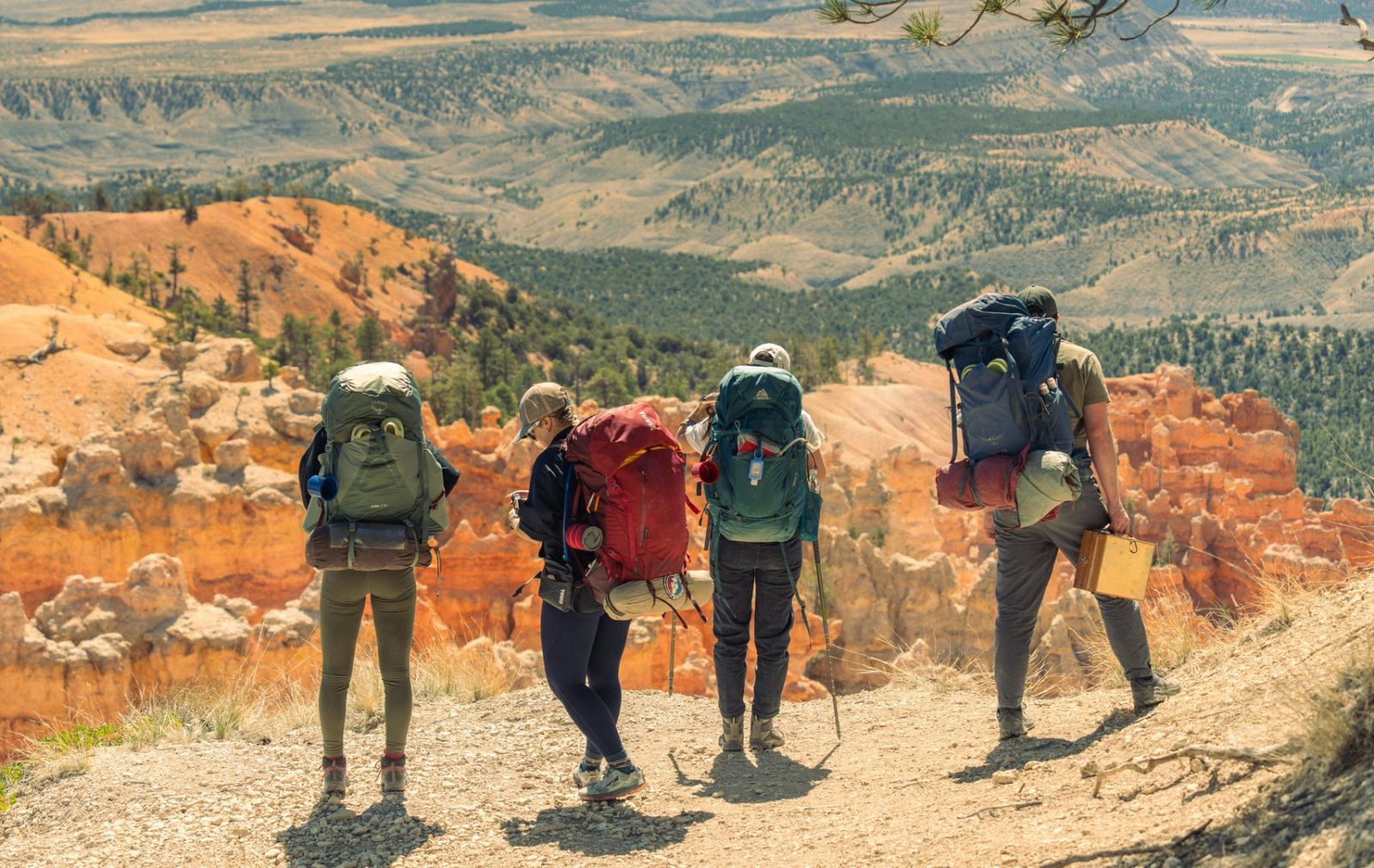
You just spent $350 on a new backpacking setup. Three days into your first multi-night trip, your tent zipper pops, your sleeping pad has a slow leak you didn't notice until 2 a.m., and you're standing in the rain rethinking every purchase decision you've ever made.
Sound familiar? You're not alone — and it's not because you bought budget gear. It's because you bought the wrong budget gear.
Here's what 2026 GearLab test data and thousands of real hiker regret stories actually tell us: the question isn't "budget or premium." It's "where does budget work, and where does it cost you more in the long run?" This guide answers that question directly — with specific products, real prices, and zero fluff.
The Gear You Can Safely Cheap Out On
Some backpacking categories are genuinely forgiving. The tech has gotten good enough that mid-tier and budget options perform nearly identically to flagship products in real-world conditions. These are the categories where your dollar stretches farthest.
Water filters are the clearest example. The Sawyer Squeeze at around $40 is arguably the most-loved piece of gear in the ultralight community. It filters 100,000 gallons, weighs next to nothing, and works as a backflushable squeeze system. There is no meaningful performance gap between the Sawyer and filters costing three times as much. This is a budget win, plain and simple.
Trekking poles under $80 are a different story — especially carbon fiber models. But aluminum poles in the $80–$120 range are genuinely reliable. The difference between a $90 aluminum pole and a $200 carbon one is weight savings you'll barely notice on your first 10 trips. Save the carbon upgrade for when you know you love this hobby.
Stuff sacks and ditty bags are one of the most obvious budget wins in backpacking. A $3 Nylofume bag from a hardware store works exactly like a $20 DCF pack liner. Knock yourself out.
The broader principle here: gear that doesn't carry load, doesn't protect you from weather, and doesn't affect your sleep quality is where budget genuinely shines. Your wallet will never notice the difference between a $15 stuff sack and a $45 Dyneema one.
The Gear Where Budget Has a Hard Floor
Now for the uncomfortable part. Some categories have a real minimum price below which you're not saving money — you're just borrowing time before a bad experience forces a replacement. These are the items where budget has a hard floor, and spending below it almost always backfires.
Tents are the most obvious example. The regret pattern is remarkably consistent in trail communities: someone buys an Amazon tent for $60–$80, gets two or three nights in, and the zipper fails, a seam leaks, or a pole snaps in moderate wind. You're not just out $80 — you're out $80 plus the cost of a replacement tent, plus whatever the failed night on trail cost you in sleep and comfort.
GearLab's 2026 testing makes the floor explicit. The Kelty Late Start 2 at $160 scores last in the test group at 44 out of 100 — and most of those failures are in weather resistance and durability. The TNF Stormbreak 2 at $220 earns GearLab's Best Buy award at 73/100. That $60 difference buys you meaningful storm performance and gear that will last far longer than a season.
The TNF Stormbreak 2 ($220) sits right at the smart budget floor for a 2-person shelter. The Big Agnes Copper Spur UL2 at $600 scores highest at 80/100 — genuinely better, but not $380 better unless weight is your singular obsession.
💡 Tip: If you're buying your first tent, borrow or rent before you commit. Tents reveal what matters to you — vestibule space, setup speed, livability in rain — in a way spec sheets never will.
Trekking poles follow the same pattern. Budget carbon poles under $80 are a known failure point under real load. Aluminum poles in the $80–$120 range handle heavy loads without drama. The hard floor here is real — and $80 is the line.
Sleeping pads are where the floor gets subtle. Cheap foam pads work fine and never puncture, but closed-cell foam ($60) compresses over time and loses insulation in cold. If you're backpacking any season beyond summer, the Therm-a-Rest Z Lite Sol is the safe foam floor — widely regarded as the most durable and versatile foam pad on the market. For inflatable pads, GearLab testing confirms that budget inflatables like the Klymit Static V2 ($75) work well in summer conditions (R-value 1.3). But once temperatures drop below 50°F, you need a higher R-value, and the budget floor moves accordingly.
The Regret Stories: Where Budget Gear Actually Failed
Trail communities are honest about their mistakes. A few patterns show up so consistently that they're worth naming directly — because the specific failure modes tell you exactly why the budget floor exists in each category.
"My Amazon tent lasted exactly two nights." Zipper failure on multi-day trips is the most common complaint. On a weekend trip near a car, you tolerate it. On a remote multi-day route, a failed tent zipper is a trip-ender.
"My carbon poles snapped on the descent." This one has a consistent trigger: loaded pack (15+ lbs), moderate-to-steep terrain, and a sub-$80 carbon pole. The failure is sudden, often dangerous, and entirely predictable in retrospect. The workaround — aluminum poles — costs $30 more and has essentially zero catastrophic failure rate.
"My sleeping pad delaminated at 35°F." Foam pads cracking and inflatable pads losing their insulation at the rated temperature is a well-documented pattern with budget products. The Therm-a-Rest Z Lite Sol and the Klymit Static V2 are the community's consensus "this won't fail you" picks — and both are under $80.
"I bought a heavy pack before I knew what I wanted." This is arguably the most expensive budget mistake, because packs last a long time when treated well. Buying a heavy internal-frame pack at $100 and then realizing at 20 trips that you want to go lighter means carrying that weight for 20 trips — or spending another $200 to upgrade. The REI Flash 55 ($229, 81/100 GearLab score) and REI Trailmade 60 ($179, 74/100) are both genuinely excellent packs that most backpackers never need to upgrade from.
The thread connecting all these regrets: the failed items were all bought without understanding the conditions they needed to handle. Rent first, learn what you need, then spend.
The 2026 Sweet Spot Kit: Under $600 for a Full Reliable Setup
Here's what a complete, genuinely capable backpacking kit looks like at the 2026 smart budget floor — tested products, real prices, nothing aspirational.
💡 Tip: Where you see "used," you can often find excellent-condition gear at 40–60% of retail. Patagonia's used gear, REI's garage sales, and Facebook Marketplace are worth checking weekly if you're building a kit on a budget.
Pack: REI Trailmade 60 ($179, new) — or find a used Osprey or Gregory internal frame for $80–$120. Don't size up; pack capacity should match your actual kit.
Tent: TNF Stormbreak 2 ($220) — GearLab Best Buy, 73/100, storm-worthy.
Sleeping pad: Klymit Static V2 ($75, summer) or Therm-a-Rest Z Lite Sol ($60, any season foam option).
Cook system: BRS-3000T stove ($17) + titanium tall pot (~$25). Add a foldable windscreen (~$8) — the Soto Amicus ($50) outperforms the BRS in wind, but the windscreen workaround gets the $17 stove to functional for most conditions.
Water filter: Sawyer Squeeze ($40) — the community non-negotiable.
Headlamp: Petzl Tikkina or similar ($15–$25) — nothing fancy needed here.
Total: Roughly $585–620 new. Used smartly, you can build this kit for under $400. None of these items will leave you stranded.
The One Rule That Saves More Money Than Any Gear Choice
Before you buy anything in the "Big Three" categories — pack, tent, sleeping bag — rent or borrow it first.
This is the single most consistently given piece of advice from experienced backpackers, and it has the highest ROI of anything in this guide. A weekend rental at a local gear library typically costs $30–50. That $50 tells you whether you want a frameless pack or an internal frame, a 2-person tent or a solo shelter, a 20°F bag or a 35°F quilt.
You'll spend $300–600 on those three items. A $50 rental fee to know which direction to spend that money is one of the best investment decisions you'll make in this hobby.
Everything else on this list — the Sawyer filter, the BRS stove, the REI Trailmade pack — is category wins where budget genuinely performs. Rent the big three, buy the smart budget picks in everything else, and you'll have a kit that works reliably without the buyer's remorse that sends so many first-timers back to the gear shop.