Chatuchak Weekend Market: The First-Timer's Survival Guide for 2026
Introduction
You've been walking for two hours. You're hot. You're lost. And you just paid ฿400 for a fridge magnet that's worth about ฿80.
That's the Chatuchak Weekend Market experience for most first-timers — and it doesn't have to be. The Bangkok market that draws 200,000 people every weekend is genuinely one of the world's great bazaars. Fifteen thousand stalls across 35 acres. Handwoven silk for a fraction of department store prices. Grilled pork skewers for less than a dollar. Centuries-old Buddha carvings sitting next to live python pet shops.
The problem isn't Chatuchak. The problem is showing up without a plan in a market this size. This guide is built for that moment. Section maps, bargaining real talk, food picks without fake stall numbers, and the mistakes most visitors make. Read it before you go — your feet and your wallet will thank you.
What Makes Chatuchak Worth the Trip in 2026
Before the logistics: is it still worth it? Chatuchak has gotten more touristy in parts. Some sections near the main gates are dominated by mass-produced "I ♥ Bangkok" merchandise aimed at casual visitors.
But the core of the market is still genuinely excellent. The ceramics in Section 17, the silk in Sections 22–26, the food courts that locals actually eat in — these haven't hollowed out. The difference between a good visit and a frustrating one comes down to knowing where to go and when to stop negotiating.
The other thing Chatuchak has that online shopping doesn't: serendipity. You will find things you didn't know you wanted. That's the whole point. The plan here isn't to regiment every minute — it's to give you enough structure that you don't waste four hours in the wrong sections and miss the parts that are actually worth it.
How to Navigate the Sections Without Getting Lost
Chatuchak is divided into 27 numbered sections, each specialising in a category. The layout follows a rough pattern — but the market has grown organically over decades, so expect dead ends and overlaps. Here's the section breakdown that matters most:
Sections 22–26: Clothing and Thai Silk
This is where you'll find the market's best silk products — scarves, ties, shirts, and fabric by the metre. Look for the blue-and-white OTOP (One Tambon One Product) logo, Thailand's government quality certification. OTOP-certified stalls are required to meet authenticity standards; their silk has irregular weave patterns by design — if it looks too mechanically perfect, it's not real silk. Budget ฿200–1,500 per item after bargaining.
Section 17: Ceramics and Pottery
Much of this section is supplied by artisans from Ban Camthian, a pottery village northwest of Bangkok known for its distinctive blue-glazed ceramics. This is one of the most authentic sections of the market — less tourist-focused, better prices for the quality. Good for: tea sets, decorative bowls, garden planters.
Section 25: Gold and Silver Jewellery
Expect serious volume here — a long corridor of stalls specialising in gold, silver, and gem-set pieces. Prices track international commodity rates, so do a quick spot-check before committing to big purchases. Thai silver (nickel silver, actually) is different from sterling — confirm what you're buying.
Sections 1–6: Food and Fresh Produce
The densest concentration of food stalls. Follow the crowd — or the queue. Stalls with lines of Thai customers almost always have better quality than empty-looking ones with pretty signage. Sections 2 and 4 are particularly dense.
Section 6: Plants and Gardening
Yes, there's a live plant section. Succulents, bonsai, tropical foliage, pots, and garden tools. It's a quieter corner of the market — good for a break from the crowds, and surprisingly popular with Bangkok locals.
Antique and Vintage Sections (central)
Genuine antiques — old Thai porcelain, carved wooden masks, vintage typewriters, WWII-era memorabilia. One section trades in reproductions alongside originals. Know what you're buying, particularly around Buddha images, which have complex export regulations.
💡 Tip: The market has numbered gates (Gate 1, Gate 3, Gate 4, Gate 5, Gate 7) that matter more than GPS. When you enter at Gate 1 from BTS Mo Chit, you're at the north end near clothing. Gate 3 is central. Know your gate before you go in — it's the easiest way to orient yourself when leaving.
Bonus: JJ Green Night Market
Operating Wednesday through Sunday evenings adjacent to the weekend market, JJ Green is an open-air vintage and lifestyle market. It's worth extending your trip if you're in Bangkok mid-week — but it's separate from Chatuchak and has different opening hours.
What to Buy — And Where to Find the Real Thing
Chatuchak sells everything from designer-label fakes to genuinely irreplaceable handcrafts. Here's how to tell the difference:
Thai Silk
The classic buy. Real Thai silk is handwoven, which means each piece has slight variations in texture and pattern — that's the quality signal, not a flaw. Machine-made alternatives are smooth and uniform. OTOP-certified stalls in Sections 22–26 are the most reliable source. Expect to pay ฿300–2,000 per item for fabric or finished goods after negotiation.
Ceramics and Pottery
Section 17's Ban Camthian ceramics are the standout. Blue-glazed tableware, decorative pieces, and garden ceramics represent genuine Thai craft at prices that would triple in a gallery. Check for chips before purchasing — the market moves fast and damaged stock sometimes sits unreplaced.
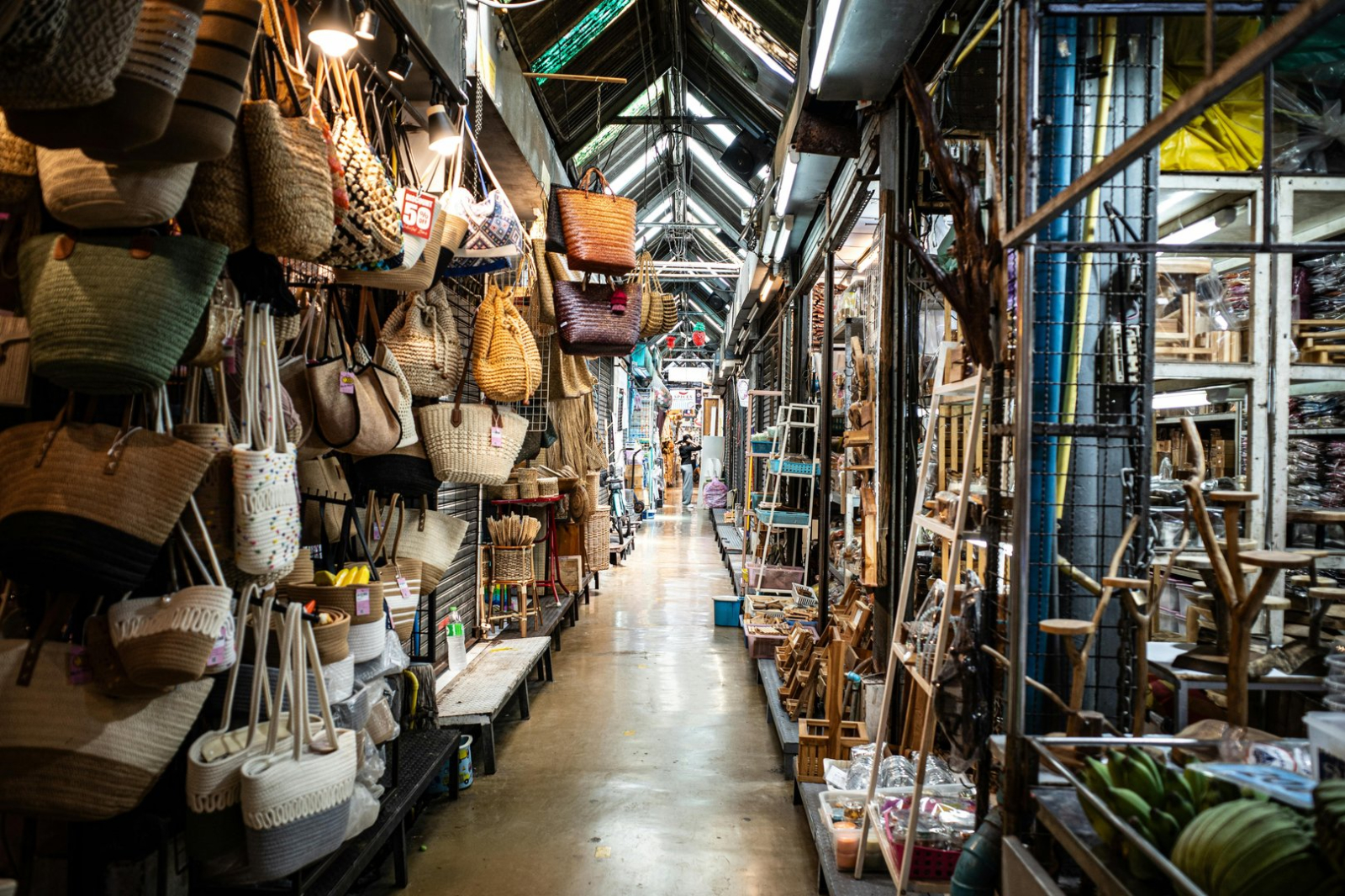
Handwoven Baskets and Rattan Goods
Thailand has strong traditions in woven goods. Hats, shopping bags, decorative baskets, and storage containers are well-made and affordable. Sections near the centre of the market have the best variety. Budget ฿80–400 per item.
What to skip: Anything branded with "I ♥ Bangkok," mass-produced keychains, and stall fronts that look like they were set up to sell exclusively to tour groups. You'll find better versions deeper in the market or in dedicated sections.
The OTOP shortcut: Look for the blue-and-white OTOP logo. These stalls sell products that meet the Thai government's authenticity and quality certification for local products. They're a reliable signal when you can't assess quality yourself.
The Food: Eating Well Without a Stall Number
The old post listed specific stall numbers for food. Those were fabricated, and in any case, vendors move and change. Here's what actually matters:
What to eat:
Mango Sticky Rice (Khao Neow Mamuang) — sweet coconut-glazed rice with ripe mango. Budget ฿50–80.
Grilled Pork Skewers (Moo Ping) — marinated in lemongrass and garlic, grilled over charcoal. ฿20–40 per skewer.
Coconut Ice Cream (I_TIM) — served in a coconut shell with toppings like sweet corn, peanuts, and glutinous rice. ฿40–60.
Roti with Banana and Condensed Milk — crispy flatbread folded around banana and drizzled with sweetened milk. ฿30–50.
Khanom Buang — thin crispy shells filled with either sweet coconut cream or a savoury shrimp-and-herb mixture. ฿30–60 for a set.
Pad Thai — the Bangkok street food classic. ฿60–120.
How to spot a good food stall: Long queues of Thai customers. That's it. Locals have no incentive to queue for tourist-targeted stalls. If you see a queue of Bangkokians waiting at 10am on a Saturday, follow it.
Where to eat: The food court near Gate 3 has air conditioning and a wide variety — useful as a break from the heat, though prices are slightly higher than the surrounding stalls.
Bargaining Without Feeling Like a Jerk
This is where most first-timers either overpay or feel rude. Here's the reality: vendors expect bargaining. It's not an adversarial process — it's a normal part of the transaction, and most sellers enjoy it.
How it works:
1. You pick something and ask the price.
2. The vendor names the first price. It's almost always at least double what they'll accept.
3. You offer 40–50% of the asking price.
4. You meet somewhere between your offer and theirs. A good rule of thumb: expect to pay about 60–70% of the initial asking price for a fair deal.
5. If you can't agree, walk away. Vendors will often call you back with a better price. If they don't, there are usually similar stalls nearby.
Bargaining etiquette:
- Always stay polite and smile. Aggression makes the deal worse for everyone.
- Know your ceiling before you start. Have a number in mind.
- If a price feels wrong after you've agreed, it's okay to politely decline and walk away before handing over money.
- Cash is easier to bargain with than card — bring small denominations.
Price ranges for common buys (after reasonable bargaining):
- Cotton t-shirts: ฿150–300
- Silk scarf: ฿200–600
- Woven basket or bag: ฿80–250
- Ceramic bowl or cup: ฿100–350
- Standard fridge magnet / small souvenir: ฿50–100
Getting There — The Practical Version
BTS Skytrain: Take the Sukhumvit Line to Mo Chit Station (N8), Exit 1. It's a 5-minute walk to Gate 1. This is the most common route — and on Saturday mornings it can be extremely crowded on the train itself.
MRT Subway: Take the Blue Line to Chatuchak Park Station, Exit 1. You emerge directly near Gate 3, which is more central. Less crowded on weekends than the BTS route. This is actually the better option if you want to hit the food sections first.
From Don Mueang Airport: The A1 or A2 bus runs directly to Mo Chit BTS Station. Journey time 30–50 minutes depending on traffic; fare ฿50. This is the cheapest and most direct route from Don Mueang.
From Suvarnabhumi Airport: Take the Airport Rail Link to Phaya Thai Station, then transfer to the BTS Skytrain. Add at least 90 minutes from landing to market.
Tuk-tuk and taxi: Only worth it if traffic is light. Bangkok traffic is routinely terrible on weekends. If you're paying for a taxi, check Google Maps first — the BTS/MRT is almost always faster.
Don't drive: Parking near the market is extremely limited and expensive on busy weekends. Use public transport.
When to Go — Timing Is Half the Battle
Saturday morning (9–10am) is objectively the best time to visit:
- Cooler than midday by 3–5°C
- Fewer crowds, especially before 11am
- Best vendor selection — popular food stalls restock in the morning
- You can leave by early afternoon before the heat peaks
Saturday vs. Sunday: Both are full operating days for all 15,000 stalls. Saturday is slightly busier and has more energy; Sunday is marginally calmer. Either works — arrive early regardless.
Wednesday evenings: Most Chatuchak Weekend Market stalls are closed. JJ Green Night Market (adjacent) is open — worth knowing if you're in Bangkok mid-week.
Wet season (May–October): Short, intense afternoon rain is common. Morning visits (before 1pm) still work well. The indoor sections of the market provide shelter during downpours. Bring a small umbrella; leave the heavy rain jacket at home.
Dry season (November–February): Most comfortable overall. Lower humidity, less rain, temperatures in the 25–30°C range.
What to Pack
Cash in Thai Baht — more than you think you need, in small denominations. ATMs inside the market have queues and fees. Budget ฿2,000–3,000 minimum for a full visit with shopping.
Reusable water bottle — it gets hot, stall water is expensive, and refill stations exist near the food courts.
Sunscreen and a hat — most of the market is outdoors with limited shade.
Comfortable shoes — you're walking for hours on concrete. New shoes will hurt.
Small backpack or foldable tote — easier to manage than a large bag in the crowds.
Phone with offline map — download a Chatuchak section map before you arrive. Signal inside the market can be patchy.
Hand sanitiser — street food involves a lot of hand-to-hand currency handling.
Pro tip (2026): Many stalls now accept PromptPay QR payments. You don't need to carry as much cash as you used to — but don't rely on it exclusively, especially in the antique and jewellery sections where cash is still preferred.
Mistakes First-Timers Actually Make
These come up repeatedly in Bangkok travel forums from people who wished they'd known:
Arriving after noon. The market opens at 9am. If you get there at 1pm in April, you're already fighting heat exhaustion, crowds, and picked-over stalls. Morning arrival is non-negotiable if you want a good experience.
Not bringing enough cash. ATMs inside have queues and charge withdrawal fees. The worst case is finding the perfect souvenir and not being able to buy it.
Trying to see everything. You won't. Pick three or four sections that interest you most and focus there. The market is vast — trying to cover all of it in one visit leads to a exhausting surface-level experience rather than a genuine deep one.
Buying at the first stall you see. The stalls near the entrance are more expensive — they're priced for people who aren't planning to walk deeper. The same items are usually available for less further inside.
Leaving bags or strollers at home. Chatuchak is extremely crowded. Large bags slow you down and make you a pickpocket target. Strollers are effectively unusable — the aisles are too narrow and the ground is uneven in places.
Forgetting to stay hydrated. Heat exhaustion in the market is common and preventable. Drink water before you're thirsty.
The best Chatuchak visits happen when you arrive early, know roughly where you're going, bargain without anxiety, and leave early enough to still feel human at the end. The market rewards preparation. Show up with a plan, stay flexible, and you'll find things you didn't know you were looking for.
