Free Things to Do in Hanoi: The Honest Version
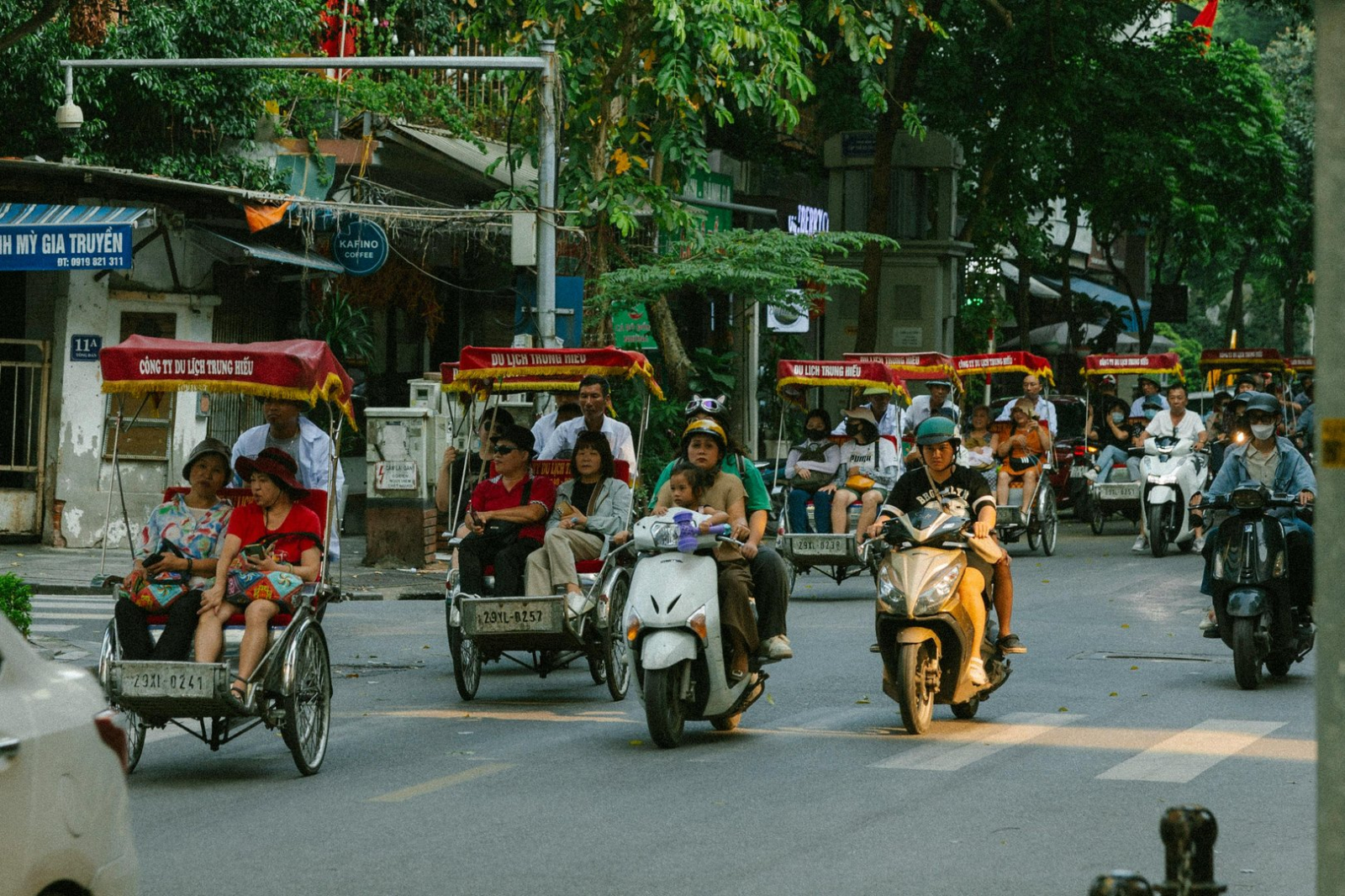
You are in Hanoi with three days left on your Vietnam trip and very little money. Or you are in Hanoi for a layover and have eight hours. Or you have been spending freely and want a day off the budget without spending anything. These are different situations that have the same question underneath them: what is actually worth doing in Hanoi for free?
The usual answer is Hoan Kiem Lake and "walk around the Old Quarter." These are fine. They are also not enough to fill a day, and the way most guidebooks present them, they do not tell you what you are actually going to experience when you get there.
Here is what you are actually going to experience — and what else is worth doing when you are not spending.
Hanoi at Dawn: The City Before the Tourist Economy Wakes Up
The most consistently striking thing about Hanoi is the gap between what the city is at 6 a.m. and what it is at noon. At dawn, Hanoi is a working city that has not yet become a tourist destination.
Hoan Kiem Lake area — the central body of water with the red bridge and the temple — fills with people doing things that are not for visitors. Tai chi groups moving through the park in synchronized slow motion. People doing callisthenics on the exercise equipment that dots the perimeter. Older women dancing in groups to music from portable speakers. Workers on bicycles carrying baskets of produce heading toward the markets. The lake itself — the Ngoc Son Temple on its small island, accessible by the iconic red Huc Bridge — is genuinely atmospheric in the early morning when the light comes flat and gray across the water and the city is still quiet enough to hear birds.
When to go: 5:30 to 7:30 a.m. The lake is most active between 6 and 7. After 8 a.m. it is still pleasant but increasingly crowded with tourists and vendors.
The dawn period is also when the breakfast culture is at its most visible. Street pho kitchens are firing up along the sidewalks — not the tourist-area pho places, but the ones that serve workers going to their first jobs. You can eat for almost nothing here. If you are not eating, just watching is worth getting up for.
The Old Quarter Before 9 a.m.: A Completely Different Neighborhood
By 9 a.m., the Old Quarter is tourist Hanoi. The souvenir shops are open, the guides are gathering groups, the咖啡 shops are full of people on laptops. By 7 a.m., the Old Quarter is a completely different neighborhood.
The deliveries are happening. Motorbikes carrying stacks of cardboard boxes, crates of live fish in water bags, towers of stacked baskets — the logistics of a dense urban neighborhood happening on the narrow streets before most people who live from tourism are awake. The smell of pho and banh cuon and bun cha is coming from sidewalk kitchens where the people eating are on their way to work, not on their way to see the city.
Walking through the Old Quarter between 7 and 8:30 a.m. gives you the street layout — the 36 ancient guild streets, each historically named for its craft (Hang Bac for silver, Hang Ma for votive papers, Hang Dao for silk) — without the afternoon noise and crowds. The architecture is easier to see when there is less foot traffic. The street names on the corners make more sense when you can read the signs without a guide next to you.
The Long Biên Bridge — the iconic French-era railway bridge — is most interesting in the morning when you can walk to the center of the bridge and watch the railway crossing below. In the afternoon it is full of photographers. In the morning, it is mostly people on their way to work.
The Museums That Are Actually Worth Your Time
Hanoi has several museums that are genuinely substantive and several that are worth skipping. The difference matters when you have limited time.
Vietnam Museum of Ethnology (Cau Giay district) — widely regarded as the best museum in Hanoi. It has extensive indoor and outdoor exhibits covering the 54 ethnic groups of Vietnam. The outdoor component — traditional village houses reconstructed on the museum grounds — is particularly distinctive. Entry fee is modest; the museum is worth the taxi ride out of the center regardless of whether you are interested in ethnography specifically. Allow two to three hours.
Vietnam National Museum of History (Ba Dinh district, near the Old Quarter) — covers Vietnamese history from the Bronze Age through to the modern period. The collection of bronze artifacts and the exhibit on the Vietnam War are both substantive. The building itself — a former colonial French structure — is worth seeing. Allow two hours.
Vietnam Army Museum (Ba Dinh district) — directly across from the Ho Chi Minh Mausoleum complex. Heavy military focus. The outdoor exhibit of captured aircraft, tanks, and artillery is visually striking. The indoor exhibits are more mixed — some are rigorous, some are propaganda. If you have one museum slot in Hanoi, the Museum of History is a better use of time. If you have two, this is worth the hour.
Ho Chi Minh Mausoleum Complex (Ba Dinh Square) — technically free to enter the grounds and view the mausoleum exterior. The mausoleum itself has specific visiting hours and a dress code. You cannot take photos inside. The surrounding area — the Presidential Palace, the stilt house where Ho Chi Minh lived, the One Pillar Pagoda — is worth walking through even if you do not go into the mausoleum itself.
The Parks Where Hanoi Actually Happens
The parks are where Hanoi is least performative. The tourist version of Hanoi is restaurants, shops, and tour groups. The real version is in the parks at 6 a.m. and again in the early evenings.
Thong Nhat Park (also called Lenin Park by older residents) is the largest park in central Hanoi. On weekday mornings it fills with organized exercise groups — martial arts, dancing, badminton, taichi. The park has a small lake and walking paths. It is primarily a local park rather than a tourist destination, which makes it more interesting to walk through than the more famous Hoan Kiem.
Thu Le Park is centered on a lake and includes the Hanoi Zoo. The zoo is not why you come here — it is a modest urban zoo. The lake and the surrounding area are pleasant for a walk and noticeably less visited by tourists than Hoan Kiem. The zoo entrance fee is modest if you want to include it.
West Lake (Ho Tay) — technically not free to "do" anything specific, but walking the north shore path is free and gives you a different angle on Hanoi than the Old Quarter. The lake is large enough that it feels like a different city. There are several temples along the north shore that have no tourist infrastructure and are primarily visited by locals making offerings. Quan Su Pagoda and Tran Quoc Pagoda (the oldest Buddhist pagoda in Hanoi) are both on the West Lake shore and both free to enter.
Walking Routes That Reveal the City's Layers
The walking route that most people miss — because they take taxis between destinations — is the approach to the Long Biên Bridge from the Old Quarter via the train street.
The train street (Duong Ham Nghi / Kham Thien area) runs through a residential neighborhood where the railway is still active. The sections open to pedestrians allow you to walk along the active track line before it crosses the bridge. The neighborhood has a specific character — old French colonial buildings in various states of repair, street food vendors who have been here for decades, a density and energy that the tourist streets have lost.
The French Colonial architecture trail is self-guided and free: the Old Quarter (French planning grid), the area around the Hanoi Opera House (rue Paul Bert historically), and the diplomatic quarter around Cua Bac Church. The buildings are not always open, but the streetscapes — the shuttered balconies, the high ceilings, the proportion of the building to the street — are visible from outside.
The Evenings: Street Culture Without Spending
After 8 p.m., Hanoi changes again. The heat drops. The street food economy shifts to its night configuration. The beer culture appears.
Bia hoi — the fresh draft beer that is brewed daily and sold at sidewalk stalls for a few thousand dong per glass — is one of the cheapest and most local things you can do in Hanoi in the evening. The bia hoi corners (particularly in the Old Quarter around Ta Hien street and the surrounding blocks) draw a mixed crowd of locals and visitors. The beer is good, the setting is a plastic stool on the sidewalk, and the conversation at the next table is happening without you in mind.
The weekend night market on Hang Dao runs Friday through Sunday evenings. It is primarily a tourist market, but it runs through the heart of the Old Quarter and the experience of the street being closed to traffic and filled with vendors is worth walking through even if you do not buy anything.
The streets around Dong Xuan Market at night — the market itself is closed, but the street food outside it is open — offer a less tourist-oriented option than the designated bia hoi streets. The food is better and cheaper because it is not calibrated for visitors.
The Old Quarter at night from a motorbike is a different experience again — if you have the budget for a Grab ride, the city from a motorbike at 10 p.m. with the street food still going and the light on the lake is a different Hanoi than the one you see on foot.
The honest answer to "what is worth doing in Hanoi for free" is mostly about timing. The city is genuinely different at 6 a.m. than at noon, and different again at 9 p.m. than at noon. The free things that are actually free and actually worth doing — Hoan Kiem at dawn, the Old Quarter before 8:30, the museum grounds, the parks — are all better before 9 a.m. than after. If you are broke in Hanoi, set your alarm. The city that is worth experiencing for nothing is mostly the one that happens before the city knows you are watching.