Top Cultural Experiences in South America You Can’t Miss
A Continent of Rhythm, Ruins, and Revelry
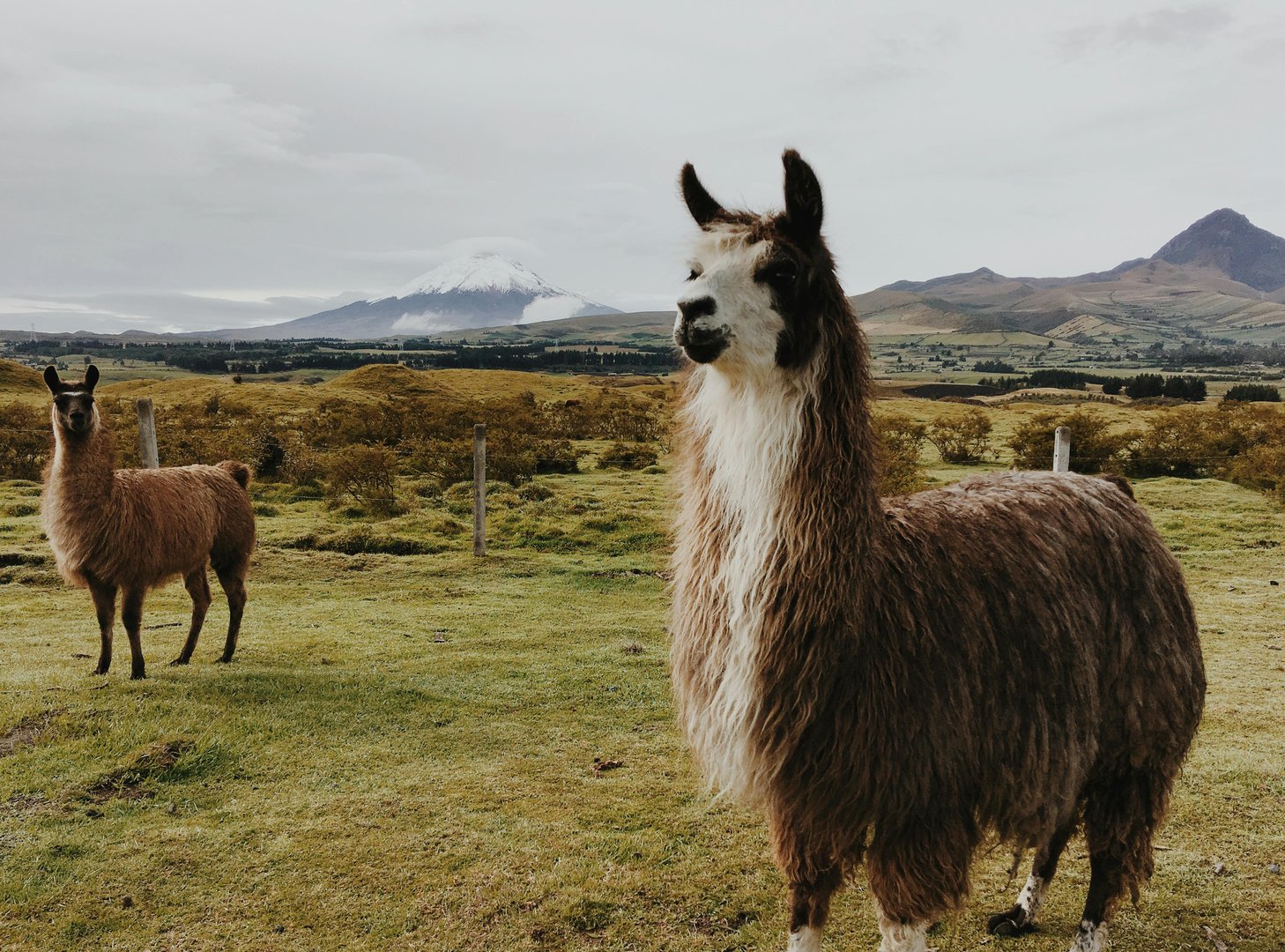
South America is not just a destination; it is a profound sensory and spiritual journey. This vast continent thrums with the echoes of ancient empires and the vibrant pulse of contemporary life, creating a cultural tapestry as diverse as its landscapes. From the snow-capped peaks of the Andes to the emerald heart of the Amazon, every nation tells a unique story through its traditions, art, and people.
Here, history is not confined to museums—it lives in the weathered stones of Machu Picchu, the colonial facades of Cartagena, and the rhythmic beat of an Afro-Brazilian drum. It is a place where pre-Columbian civilizations, European influences, African heritage, and indigenous resilience have fused into something entirely unique and endlessly captivating. Whether you seek the solemn silence of a sacred site or the explosive joy of a street carnival, the cultural experiences here are as deep as they are unforgettable.
This guide is your invitation to move beyond the postcard and connect with the soul of South America. We will journey through ten unique cultural encounters that offer a true taste of this continent's spirit—experiences that will linger in your memory long after you've returned home. Prepare to be captivated.
1. Journey to the Lost City of the Incas
From the vibrant streets of Cusco, the ancient heart of the Inca Empire, a journey of a lifetime ascends into the mist-shrouded peaks. Your cultural exploration reaches its zenith at Machu Picchu, the legendary "Lost City" and an undisputed icon of South America. This awe-inspiring citadel, perched nearly 8,000 feet above sea level on a ridge between the Andean peaks of Huayna Picchu and Machu Picchu Mountain, is more than a ruin—it is a profound testament to human ingenuity.
Discovered by the outside world only in 1911, the site offers breathtaking panoramic views that stretch across the Urubamba River valley. As the morning clouds part, the intricate stonework of temples, terraces, and plazas is revealed, showcasing the Inca civilization's extraordinary sophistication. You’ll witness their advanced engineering firsthand in the precisely cut stones that fit together without mortar, the intricate water channel systems, and the celestial alignments of sacred structures like the Temple of the Sun and the Intihuatana stone. Walking among these silent, majestic ruins provides an unparalleled glimpse into the spiritual, agricultural, and architectural mastery of a culture that thrived in harmony with this formidable mountain landscape.
2. Lose Yourself in the Rhythmic Spectacle of Rio Carnival
From the serene heights of the Andes, we descend into the pulsating heart of Brazil for a celebration of life on an epic scale. The Carnival of Rio de Janeiro is not merely a festival; it is a world-famous, immersive explosion of joy that captures the very soul of the nation. For a few dazzling days each year, the city transforms into a vast, open-air theatre of music, movement, and unbridled creativity.
At the core of the spectacle are the legendary parades held in the Sambadrome, where the city’s top samba schools compete in a breathtaking display of artistic storytelling. These are not casual processions but meticulously choreographed performances featuring thousands of participants. Elaborate costumes, adorned with feathers, sequins, and glitter, create a flowing river of color and fantasy, while monumental, animated floats glide down the avenue. The air vibrates with the irresistible, rhythmic beat of samba music, performed live by powerful baterias (percussion bands) that compel everyone to move.
Beyond the Sambadrome, the spirit of Carnival spills into every corner of Rio. Street parties, known as blocos, take over neighborhoods with their own unique themes and soundtracks, inviting everyone—locals and visitors alike—to dance together in a collective embrace of happiness. This vibrant celebration is the ultimate cultural experience in South America, offering a chance to witness the passion, artistry, and infectious energy of Brazilian culture in its most concentrated form. It is a sensory overload you will never forget.
3. Step into the Living Heart of the Amazon: Indigenous Cultures
Moving beyond the breathtaking biodiversity, the true soul of the Amazon is found in its people. The rainforest is home to over 400 distinct indigenous tribes, each a guardian of profound ancestral knowledge and a unique worldview. A journey here is incomplete without the rare privilege of learning from these communities, whose lives are intricately woven into the fabric of the forest itself.
Visiting a community (always through a respectful, community-managed tour) offers a window into traditions that have sustained this ecosystem for millennia. You might witness intricate handicrafts woven from forest fibers, hear creation myths told in languages echoing the sounds of the jungle, or learn about medicinal plants whose uses are cataloged in oral tradition rather than textbooks. Their beliefs often center on a deep spiritual connection with nature, where rivers, animals, and trees are seen as kin, not resources.
Perhaps the most vital lesson lies in their sustainable living practices. These cultures are master ecologists, practicing agriculture, hunting, and gathering in ways that maintain the forest's health. From the ingenious design of a maloca (communal house) to rotational farming techniques, their daily existence is a blueprint for living in harmony with one of the planet's most complex environments. Engaging with these communities isn't just a cultural exchange; it's an education in resilience and a powerful reminder of the human capacity to thrive as part of nature, not apart from it.
4. Step Back in Time on the Cobblestone Streets of Cartagena
From the rhythmic pulse of Rio, we journey north to the timeless elegance of Colombia’s Caribbean coast. Cartagena de Indias is a living museum, a breathtakingly preserved colonial gem where history isn't just studied—it's felt beneath your feet on sun-warmed cobblestones and seen in the kaleidoscope of colors adorning its balconied buildings. Encircled by legendary stone fortifications, the walled city, a UNESCO World Heritage site, offers an unparalleled cultural immersion into South America’s colonial past.
The city’s rich narrative unfolds around every corner. The grandeur of the past is palpable in the vaulted ceilings of the San Pedro Claver Church and the imposing Castillo San Felipe de Barajas, a fortress that tells tales of pirates and sieges. Yet, Cartagena’s history is balanced by a vibrant, present-day energy. This is most alive in its lively plazas, like the Plaza de los Coches or the shaded Plaza de Bolívar, where locals and visitors mingle amidst the buzz of street performers and the gentle clip-clop of horse-drawn carriages.
Beyond the monumental sights, the true magic lies in simply wandering. Get lost in the maze of narrow streets in the Getsemaní neighborhood, now a canvas for stunning street art that dialogues with its colonial framework. Explore boutique museums detailing the city’s complex history, and when the tropical sun peaks, find respite in a shaded courtyard café. As evening falls, the plazas transform into social hubs, with music spilling from open doors and the aroma of Colombian cuisine filling the air, proving that in Cartagena, history and vibrant culture are inextricably and beautifully intertwined.
5. Soar Above the Ancient Desert Canvas: Peru's Nazca Lines
Leaving behind the lush, vertical world of the Andes, our journey through South America's wonders descends into the stark, horizontal expanse of the Peruvian coastal desert. Here, on the arid Pampa Colorada, lies one of the continent’s most profound and perplexing enigmas: the Nazca Lines.
These are not mere scratches on the earth, but a vast gallery of ancient geoglyphs etched into the desert floor. Created by the Nazca culture between 500 BCE and 500 CE, the lines form hundreds of intricate figures, from geometric shapes stretching for miles to precise depictions of a hummingbird, a spider, a monkey, and even a colossal astronaut. The scale is breathtaking; many of the designs are so enormous that their form becomes coherent only when viewed from the air, raising immediate questions about their purpose and creation.
This is precisely what makes witnessing them such a unique cultural experience. To truly appreciate their majesty, you must take to the skies on a guided flight from the nearby town of Nazca. As your small plane banks over the desert, the seemingly random scratches below resolve into astonishing, precise artwork that has survived for millennia. The theories behind their existence are as captivating as the visuals—were they astronomical calendars, ritual pathways for water deities, or perhaps messages to celestial beings? The mystery is part of the allure.
Standing at a desert viewpoint offers a humbling, ground-level perspective, but it is from above that you become a true witness to this ancient, open-air mystery. The Nazca Lines are a powerful testament to human ingenuity, a puzzle written on the planet itself, waiting to be pondered from the heavens.
6. Saddle Up: Immersing Yourself in Argentina's Gaucho Heritage
From the sophisticated urban rhythms of Buenos Aires, journey into the soul of the Argentine countryside, where a legendary figure rides across the endless pampas: the Gaucho. More than just a cowboy, the Gaucho is a potent symbol of independence, skill, and national identity, and experiencing this culture firsthand is a journey to the heart of Argentina's traditions.
The ideal way to connect with this heritage is by visiting a traditional estancia (ranch). These working ranches or historic homesteads open their gates to visitors, offering a vivid window into the Gaucho's world. Here, you can witness their exceptional horsemanship, a skill born from a life spent herding cattle across vast plains. Many estancias offer the chance to saddle up yourself, whether for a gentle ride through the serene landscapes or to watch skilled Gauchos demonstrate their breathtaking equestrian talents during jineteadas (rodeo events).
But Gaucho culture is as much about community and celebration as it is about ranch work. Your visit will likely be soundtracked by the stirring strains of folk music, with the melancholic bandoneón or a lively guitar strum setting the tone. The day often culminates in the quintessential Argentine social ritual: the asado. This is far more than a barbecue; it's a slow, ceremonial cooking of various meats over an open fire, a feast of flavor where the Gauchos' renowned culinary art takes center stage. Sharing this meal, often under a blanket of stars, you don't just taste Argentina—you become part of a centuries-old tradition of hospitality and storytelling around the fire.
7. Immerse Yourself in the Vibrant Tapestry of Otavalo Market
Transitioning from the serene heights of the Andes, prepare for a burst of color and culture at the Otavalo Market. This isn't just a shopping trip; it's a journey into the living heritage of the Otavaleño people, whose entrepreneurial spirit has created one of the largest and most famous indigenous markets in all of South America.
Held every day but exploding in size and energy on Saturdays, the market spills across the town of Otavalo. The air is filled with the gentle hum of Quechua, the aroma of roasting hornado (suckling pig), and the visual feast of countless textiles. The heart of the experience is the Plaza de Ponchos, a kaleidoscopic sea of stalls where you can find an astonishing variety of handmade crafts. Exquisitely woven ponchos, intricate tapestries, soft alpaca sweaters, and vibrant shigras (woven bags) are all produced using techniques passed down through generations.
Beyond the iconic textiles, explore the labyrinth of alleys for traditional jewelry, carved Tagua nut figurines, and authentic musical instruments like panpipes. To complete the cultural immersion, be sure to visit the bustling food sections. Sample local cheeses, savor llapingachos (potato patties), or try a refreshing chicha drink. Engaging with the skilled artisans—many in their traditional white shirts, dark trousers, and long braids—adds a profound personal layer to every purchase. A visit here is a celebration of enduring tradition and a chance to take home a piece of Ecuador’s rich, artistic soul.
8. Step Back in Time in Quito’s UNESCO-Listed Heart
From the soaring peaks of the Andes, we descend into a city cradled by mountains, where history is etched into every cobblestone. Quito, Ecuador’s lofty capital, offers a breathtaking contrast to untamed nature: one of the world’s largest and best-preserved colonial centers. Declared a UNESCO World Heritage Site, this historic heart isn't a mere open-air museum; it’s a vibrant, living quarter where the grandeur of Spanish architecture and rich indigenous heritage create an unforgettable cultural tapestry.
Your journey through time begins at the Plaza Grande, the city’s main square, surrounded by the Presidential Palace, the Archbishop’s Palace, and the magnificent Catedral Metropolitana. From here, winding streets lead to architectural marvels like the ornate Compañía de Jesús Church, its interior a staggering spectacle of gold leaf, and the imposing Basilica del Voto Nacional. Each plaza and church tells a story of artistic fusion and colonial ambition.
Beyond the facades, Quito’s charm unfolds in its museums and daily life. Visit the Museo de la Ciudad to trace Quito’s evolution from pre-Columbian times to the present, or explore the Casa del Alabado for a profound look at pre-Columbian art and spirituality. The true experience, however, is in the details: savoring hornado (roast pork) in a centuries-old convent courtyard, browsing Otavalo weavings in a bustling market, or simply watching life unfold from a sunny bench in Plaza San Francisco. Quito doesn’t just show you South American history—it lets you walk through its very streets.
9. Witness the Sun's Rebirth at Cusco's Inti Raymi Festival
Following the spiritual journey to Machu Picchu, immerse yourself in a living echo of the Inca Empire by timing your visit to coincide with the Inti Raymi, the magnificent Festival of the Sun. Held annually on June 24th, this spectacular event marks the winter solstice in the Andes, a time when the Incas performed essential rituals to beg the sun god, Inti, to return and ensure a bountiful harvest.
The festival transforms the city of Cusco, the ancient capital of the Inca Empire, into a vibrant, open-air museum. The celebrations begin at the ceremonial site of Qorikancha, the former Temple of the Sun, before a grand procession, led by an actor portraying the Sapa Inca (emperor), moves to the formidable fortress of Sacsayhuamán. Here, against a backdrop of colossal stone walls, the main ceremony unfolds. Witness a mesmerizing pageant of elaborate costumes woven with symbolic patterns, haunting music from traditional quena flutes and pututu conch shells, and solemn rituals performed in the Quechua language. It’s a powerful, colorful reenactment of the ancient gratitude and plea to the sun, blending history, culture, and community spirit into an unforgettable sensory experience.
10. Step Onto Another Planet at Bolivia's Salar de Uyuni
Leaving behind the lush canopies and ancient pathways, we journey to one of the most surreal and breathtaking landscapes on Earth: the Salar de Uyuni. Spanning over 10,000 square kilometers, this vast, blindingly white expanse is the world’s largest salt flat, a prehistoric lake bed transformed into a seemingly infinite mirror of the sky. During the rainy season, a thin layer of water creates a perfect reflection, blurring the line between heaven and earth, while the dry season reveals a cracked, hexagonal-patterned crust stretching to the horizon. It is a place of profound silence and awe-inspiring scale, where perspective dissolves and playful photography becomes a must.
Yet this is more than a natural wonder; it’s a living cultural and economic landscape. The nearby town of Uyuni serves as the gateway to the salt flats and offers a genuine insight into the local way of life, deeply connected to this saline environment. Here, the importance of salt mining becomes clear—it’s a traditional livelihood where workers harvest the crust into piles for processing. You’ll find hotels built from salt blocks and artisan markets selling salt-based souvenirs. Venturing onto the Salar also leads to islands like Incahuasi, studded with giant cacti, and reveals the region's rich history, from the trains of the antique railway graveyard to the vibrant, enduring communities whose lives are intertwined with this extraordinary, otherworldly terrain.
Conclusion: Your Journey into a Continent of Soul
South America is not merely a destination to visit; it is a continent to be felt, heard, and deeply experienced. As we have journeyed through these ten unique cultural encounters—from the silent majesty of ancient ruins to the pulsating energy of vibrant festivals, from enduring indigenous traditions to the layered narratives of colonial history—a singular truth emerges: this is a land of profound and endless depth.
The experiences outlined here are not a checklist, but an invitation. They are the beginning of a conversation with a continent whose soul is woven from countless threads of heritage, resilience, and celebration. To stand in the shadow of Machu Picchu, to lose yourself in the rhythm of a samba school rehearsal, or to share a moment of quiet understanding with a local artisan is to connect with a story much larger than yourself.
So, embrace the call. Let these cultural treasures be your starting point, knowing that around every corner awaits another discovery—a hidden mercado, a local legend, a flavor, a sound, a smile that transforms a trip into a transformative journey. South America’s true richness lies in its ability to change you, offering not just memories, but a broader, more vibrant understanding of our world. Your adventure into its heart is just beginning.
