The 8 Mistakes Travelers Keep Making in Kyrgyzstan (And How to Avoid Them)
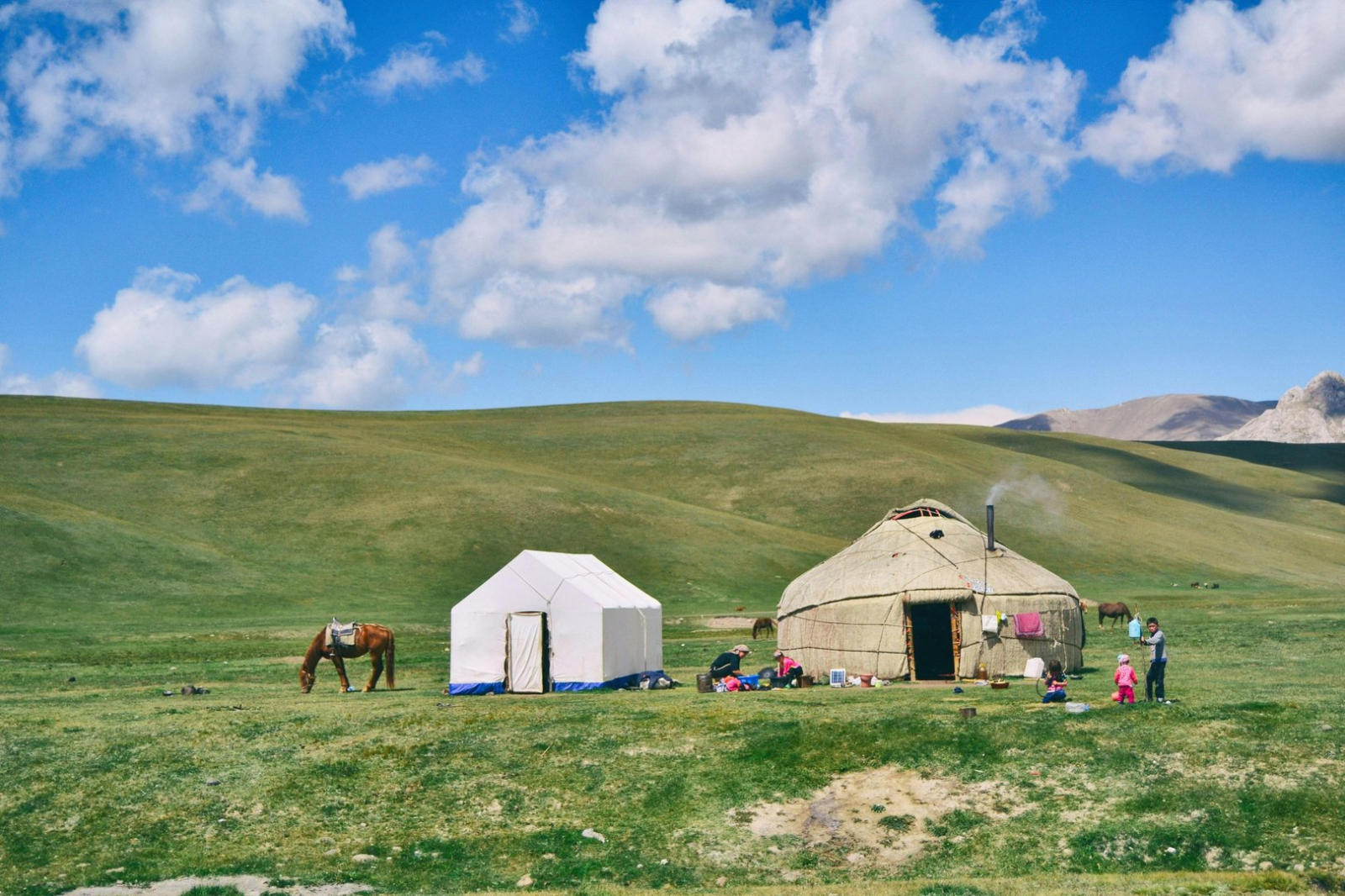
Kyrgyzstan has a reputation problem. Not a reputation problem for the country itself — the reputation the country has among the travel writing world is the problem. Browse most Kyrgyzstan content and you'll find sweeping shots of alpine lakes, yurt camps at sunset, and breathless prose about "authentic Central Asian culture." What you won't find is the friction. The friction is real, and it catches almost every first-time visitor.
Here are the eight mistakes that catch most people in Kyrgyzstan, based on real traveler reports and on-the-ground community knowledge. Learn them before you go.
Mistake 1: Arriving Expecting Southeast Asia
The most common setup for disappointment in Kyrgyzstan: a traveler who's done Vietnam, Thailand, or Indonesia, and expects a similar experience. It isn't. Kyrgyzstan is genuinely difficult to travel independently. Infrastructure is inconsistent, English is rare outside Bishkek, the cash economy requires active management, and a lot of the country simply doesn't have the tourist ecosystem that Southeast Asia spent decades building.
This isn't a knock on Kyrgyzstan — it's an invitation to adjust your frame. The reward for that friction is enormous. But showing up with Southeast Asia expectations will make you miserable before you've seen a single mountain.
Mistake 2: Not Carrying Enough Cash (Or Carrying the Wrong Kind)
Kyrgyzstan runs on som. Not card. Not digital payments. Som. The ATM network outside Bishkek is unreliable — in many towns it's non-existent, and in others the machines are frequently empty or broken. Many guesthouses, restaurants, and local transport operators in rural areas accept only cash.
A few specific cash mistakes that catch travelers:
ATMs from KyrgyzKommertsbank charge no fee — use those over other bank ATMs where possible. PKC bank charges 150 som per withdrawal.
Defaced currency is rejected — banks and exchange booths won't take torn, crumpled, or damaged foreign bills. Bring crisp USD or EUR for exchange.
Always demand change immediately — don't assume a vendor will have change later. In rural shops, they might not.
💡 Tip: Carry 5,000–10,000 som on you at all times when traveling outside Bishkek. That's roughly $55–110 USD. This isn't paranoia — it's normal preparation.
Mistake 3: Assuming English Will Get You Through
In Bishkek, you'll find English-speaking staff at hostels, some restaurants, and tourist-focused tour operators. In the south, in small towns, on marshrutkas, and in rural yurt camps: almost no one speaks English. Russian is the working language, and in many rural areas, Kyrgyz is the dominant language.
Translation apps help, but they're not a substitute for language basics. When you're negotiating a marshrutka fare, arguing with a taxi driver, or trying to explain a food allergy at a yurt camp, apps hit their limits fast.
The basics that will serve you: numbers, "how much," "thank you," and the phrase "ochen mnogo" (ochen = very, mnogo = too much) — say it when a taxi driver is clearly inflating your fare. They know what it means.
Mistake 4: Driving at Night
Road accidents are the single biggest safety risk for travelers in Kyrgyzstan. Roads — particularly outside the main highways — lack proper signage, lighting, and surface maintenance. Night driving amplifies all of these problems. Routes that are straightforward in daylight become genuinely dangerous after dark.
Police corruption is also a real layer of stress: drivers reported being stopped and asked for money. If stopped by police, the standard advice is to be calm, insist on proper documentation, and if asked for a bribe, don't pay without a clear official receipt. In practice, many travelers report paying small amounts to move on quickly. It's not ideal, but it's the reality on the ground.
⚠️ Warning: If you plan to self-drive, do it during daylight hours only. Outside Bishkek, assume no road lighting, no cell service, and potentially no other vehicles for long stretches. Download OsmAnd or OpenStreetMap offline maps before you go — many trailheads and rural routes aren't on Google Maps.
Mistake 5: Not Checking the Border Status Before You Go
Kyrgyzstan has active territorial disputes along its borders, particularly with Tajikistan in the southwest of Osh region. These aren't historical footnotes — border areas can flare into armed conflict with little warning, and the FCDO and other government travel advisories update their guidance accordingly. The GOV.UK Kyrgyzstan travel advice page was updated with revised safety information as recently as February 2026.
Check your government's travel advisory before you go. Also check it again the week before. Border status can shift faster than travel content gets updated.
Inside the country, some border regions have restrictions on photography and movement. Follow local guidance and ask your guesthouse host or a local guide before heading toward contested areas.
Mistake 6: Missing the Cultural Layer
Kyrgyzstan is one of the most hospitality-driven cultures in the world. Guests are treated with a generosity that goes beyond performance — it's a cultural value, not a tourist service. Understanding a few key customs will save you from awkward moments and genuinely improve your experience.
Tea etiquette: When you've had enough tea, cover your cup and say "ichtym" (I've drunk). Your host will understand and stop pouring. Leaving an uncupped cup means "please, more." This sounds minor until you've had your seventh cup at 11pm and you're fighting to stay awake.
Gendered hospitality roles: In southern Kyrgyzstan, it's traditionally the man's role to pour tea. In the north, it's the woman's. Follow your host's lead — don't grab the teapot if you're unsure.
Bride kidnapping (Ala Kachuu): This is a real phenomenon in rural areas, not just a cultural artifact. Ala Kachuu (literally "grab the bride") involves a man kidnapping a woman for marriage, sometimes with her consent and sometimes without. Most Kyrgyz people you encounter in urban areas — Bishkek, Karakol, Osh — will tell you it's "tradition, not common anymore." In rural areas, the reality is more complicated. Women travelers should be aware of this cultural dynamic, particularly in southern Kyrgyzstan and smaller towns.
Mistake 7: Underestimating the Infrastructure Gap
Many first-time visitors to Kyrgyzstan plan their trip the way they'd plan a trip to Portugal or Croatia — with flexible accommodation, same-day booking, and the assumption that transport will be easy to figure out on the ground. That works in parts of Central Asia, but not here.
Specific infrastructure gaps to plan around:
Yurt camps and remote guesthouses book up fast in peak season (June–August). If you're planning a Song Kul or Karakol yurt camp stay in summer, book several days in advance through your Bishkek hostel or a local operator.
Trail maintenance doesn't exist in most areas. The Ala Kul hike, Altyn Arashan hot springs route, and most backcountry treks have no trail crew, no signage, and no infrastructure. Carry layers, water, and a charged phone with offline GPX files.
Cell service is unreliable outside towns. Bishkek has 4G. Karakol has decent coverage. Rural areas and most mountain passes: no service. Download your maps offline before you leave each town.
CBT (Community-Based Tourism) maps are often out of date. If a local guesthouse offers you a CBT map for a hike, verify the route against Waymarked Trails or a recent GPX file.
Mistake 8: The Russia Transit Visa Trap
This one catches long-haul travelers who route through Moscow or St. Petersburg on Aeroflot or a similar carrier. Since 2018, Russia requires a transit visa for most nationalities — even for brief connections where you don't leave the airport. If you're flying into Bishkek via Moscow and assuming your passport is enough to transit, you may be turned away at the gate.
This applies whether you change planes in Moscow, St. Petersburg, or any other Russian hub. If you're coming from Europe, the Middle East, or Asia and planning to transit through Russia, research the current transit visa requirements for your nationality before booking. The rules have been changing and continue to change — verify against your government's travel advice or the Russian consulate directly.
💡 Tip: Istanbul and Baku are common alternative routing points that avoid the Russia transit issue for many nationalities. If you're booking flights, check whether your itinerary goes through Russia and plan accordingly.
Kyrgyzstan rewards the traveler who shows up informed. The country doesn't hold your hand — it throws you into alpine meadows and remote valleys and lets the mountains do the talking. Get the practical pieces right (cash, language basics, transport, maps) and you free up all your attention for the parts that actually matter: the way light hits Issyk Kul at dawn, the sound of hooves in a yurt camp at sunrise, the moment a mountain pass opens onto a glacial valley that hasn't changed in a thousand years.
Tags
Nancy Tran
Social Media Dreamer